“Coffee plants” search results (22300)

Common sense of coffee beans in Yunnan Dehong small grain coffee planting base
Dehong small grain coffee is native to Africa and Ethiopia and is the main cultivated variety in the world. In 1951, coffee seed was first introduced to Dehong Luxi Cotton cropping Experimental Station for productive cultivation. The seedlings were planted in 6 mu and grew well. In 1956, the Dehong Prefecture Committee decided to vigorously develop coffee in the whole state, and held a training course on coffee planting techniques throughout the state, so that small-grain coffee was widely developed in the whole state. 1958 de
2015-02-15 Yunnan Dehong Xiao Grain Coffee planting Base Coffee Bean Common sense
Coffee bean Katim CIFC7963
Characteristic small seed coffee, belongs to the Katim high generation variety, the plant is medium dwarf, the growth vigor is vigorous, the secondary character is stable, the crown top bud tender leaf is emerald green, the whole plant leaf color is dark green, the plant shape is columnar, the Internode is short, the branch is many, the growth is exuberant, the adaptability is wide, the drought resistance is strong, has the certain cold resistance ability, under the medium management level, the average dry bean yield is more than 200 kg. Seeds per kilogram
2014-09-05 Coffee beans Katim.
The planting system of Ethiopian coffee is roughly divided into four types.
The planting system of Ethiopian coffee is roughly divided into four categories: 1) primeval forest coffee (Forest Coffee:8-10%) 2) semi-virgin forest coffee (Semi-forest Coffee: 30-35%) 3) Manor coffee (Garden/Cottage: 50% mae 55%) 4) Enterprise coffee cultivation (Plantation Coffee: 5-6%) specifically: primeval forest coffee belongs to the category
2014-08-13 Coffee knowledge Ethiopia coffee cultivation planting system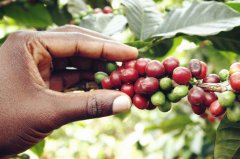
Red Kaduai Red Catuai of Tianyi Manor in Nicaragua planting area
The planting conditions in Nicaragua are not inferior to those in Central American countries. Shaded coffee is grown at high altitudes. It tastes round and balanced with less sharp acid. The main unknown factor is war and hurricanes, which make a single farm unsustainable. There is no historical data for raw bean merchants to track and check farm data until after 2003, the bad factors of coffee quality are removed and backward intercourse.
2016-06-19 Nicaragua planting region providence Manor Red Card Duai Red Cat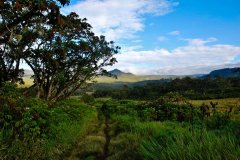
Qianjie Cafe Kenya AA TOP Strange processing Plant washes coffee beans
Details of coffee beans: country: Kenya factory: Kirinyaga altitude: 1900 m varieties: SL28, SL34 treatment plant: Kii treatment method: full washing treatment, sun drying producer: Rungento Farmers Cooperative Society member small farmers (about 1214) area: about 0.3ha per small farmer, annual rainfall of about 1900 coffee trees
2015-02-13 Front Street Cafe Kenya TOP Strange processing Plant Water washing Coffee beans Coffee
Caffeine and healthy caffeine is a kind of plant alkaloid.
Caffeine is a kind of plant alkaloid. At present, more than 60 kinds of plants are known to contain caffeine, of which coffee and tea are the most common. In fact, this is a product of tropical plants adapting to the environment. In the tropics, there is no winter, and diseases and insect pests are more serious, so plants have evolved many ways of self-defense. Caffeine is one of them, which can be regarded as a natural insecticide. Although there is one
2015-09-02 Caffeine health plant alkaloids one caffeine currently known
Indonesian boutique Manning Coffee Flavor taste Manor introduces the price of Indonesian coffee
Coffee flower Sunda Hejo processing plant is located in Bandung, West Java Province, the main coffee growing range is Malabar, about 1650 meters above sea level, volcanic soil (the coffee grown here has no smoky taste), springs, and the mountain area has a large temperature difference between day and night, so it is very suitable for coffee cultivation. Cooperative farmers are mainly local village residents, about 100 people, built a coffee treatment
2016-08-04 Indonesia boutique Mante coffee flavor taste manor producing area introduction price
How much do you know about the growing conditions and distribution of coffee
Coffee planting conditions and distribution 1. What is coffee? Coffee (Coffee) is derived from the Latin word Coffea (biological word name) and belongs to a member of the Rubiaceae family. These plants are all woody plants, most of which are distributed in the tropics, with more than 500 classifications and about 6000 varieties. Most of the Coffea plants are tropical evergreen bushes 5-6 meters high.
2014-07-30 Coffee planting coffee growing conditions coffee beans
Establishment of Coffee quality Inspection system in Yunnan
On March 26, in Yunnan Province, the largest coffee producing area in China, local coffee companies are registering coffee bases in an attempt to establish a quality traceability system. Scan the bar code to find out the planting area, altitude, grower, primary processing plant of each cup of coffee. It is understood that this is also an important measure for Yunnan to promote the fine cultivation of coffee and create boutique coffee. Located in the west of China
2015-09-02 Establish Yunnan coffee quality inspection system
Introduction of Bolivian coffee planting areas planted at an altitude of 180,670 meters above sea level
In the past, coffee trees in Bolivia used to act as hedges and ornaments around the garden. Real commercial production began in the early 1950s. The great frost of 1957 seriously damaged Brazil's coffee industry, while Bolivia (Bolivia) benefited from it and developed rapidly. Bolivian coffee is grown at an altitude of 180,670 meters above sea level, including Allah.
2016-06-23 Altitude 180670 m altitude planting Bolivia coffee region medium
Coffee legend Coffee the origin of this plant dates back millions of years
The origin of coffee plant can be traced back to millions of years ago, in fact, it was discovered in the real age is not known, only legend coffee is Ethiopia Heights a shepherd named Kaldi (Kaldi), when he found his sheep accidentally ate the fruit of a plant, became very lively and energetic, from the discovery of coffee. All historians seem to agree.
2015-09-18 Coffee Legend Plant Origin Dating Millions of years ago From
An introduction to the characteristics of the Flavor Manor of small Grain Coffee in Yunnan, China
Pu'er, Xishuangbanna, Wenshan, Baoshan, Dehong, Lincang and other places in the south and west of Yunnan are all the distribution areas of small-grain coffee in Yunnan. As of January 1, 2012, according to the comprehensive survey of Yunnan Province, the planting area of coffee in Yunnan has exceeded 800000 mu, and the output of coffee beans in this period is expected to exceed 55000 tons. For the future, the blueprints of local governments in Yunnan have also been drawn up:
2016-09-19 China Yunnan pickup small grains Coffee Flavor Manor characteristics introduction
Basic knowledge of Coffee Coffee planting Belt
Most of the coffee producing areas in the world are located in the tropics between the Tropic of Cancer and the Tropic of Cancer, which we call the coffee belt and Coffee Belt or Coffee Zone in English. As a tropical cash crop, coffee trees grow in coffee belts with excellent climatic conditions, where the sun shines all the year round, is rich in calories and Rain Water, and the annual average temperature is above 20 ℃. But the high temperature
2014-10-29 Coffee knowledge coffee basics coffee growing belt
Planting techniques of small Coffee trees in Yunnan: irrigation and fertilization
Fertilization is one of the key measures for high yield of cultivated coffee. According to the data, for every 1 kg of dried beans harvested, coffee trees absorb 70 grams of nitrogen, 14 grams of phosphorus and 76 grams of potassium from the soil.
2014-09-02 Coffee knowledge small grain coffee coffee tree planting techniques irrigation fertilization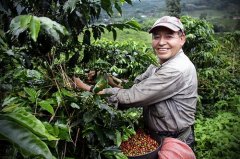
Costa Rican Saint Roman washing Plant Coffee, cooked beans, Royal Coffee fresh order for self-baking
The best coffee in Costa Rica seems to come from small processing plants, spread across several major coffee producing areas, including Tarazu and the western valley. This so-called coffee revolution originated 15 years ago and has greatly changed the way bean baking experts and importers think about Costa Rican coffee. Take the processing plant as the center, collect coffee beans from the surrounding small farms for processing, most of these farms are small societies
2016-05-08 Costa Rica Roman washing processing Plant Coffee cooked beans Royal fresh place order
The whole process of planting and growth of coffee beans
Common questions about coffee bean cultivation: first, what are coffee kernels? How did you get the coffee seeds? Coffee seed, commonly known as coffee shell dried bean, is a kind of coffee seed without removing mesocarp and silver skin. Coffee seed is divided into Arabica Arabica seed and Robusta Robasta seed. The picture shows the commercial coffee raw bean available for consumption, and it is also the two major commercial plants on a large scale.
2015-04-24 Coffee beans growing the whole process about coffee beans planting common problems.
The two most important coffee varieties in the world
Arabica coffee beans Arabica coffee tree plant morphology is relatively slender shrubs, leaves are oval, green, natural growth height generally up to 5-6 meters, artificial planting needs to control its height at about 3 meters, in order to facilitate future picking. Arabica coffee trees generally have a life span of 20-30 years.
2014-07-09 coffee knowledge coffee varieties arabica robstein
Description of Coffee Flavor of Katim Coffee in Yunnan Province, China
The method of describing the flavor of boutique coffee beans in Katim, Yunnan, China introduces the selection of suitable forest land with an annual average temperature of 19-21 ℃ years, the accumulated temperature of 10 ℃ per year is more than 6800 ℃, the coldest monthly average temperature is 11.5 ℃, the absolute lowest temperature is above 1 ℃, the coldest monthly average temperature is 11.5 ℃, the monthly average temperature of 13 ℃ is more than two months, the extremely lowest general year is above 0 ℃, and some years appear-1 ℃.
2016-10-21 China South Carolina Tim Coffee Flavor description treatment Grinding characteristics varieties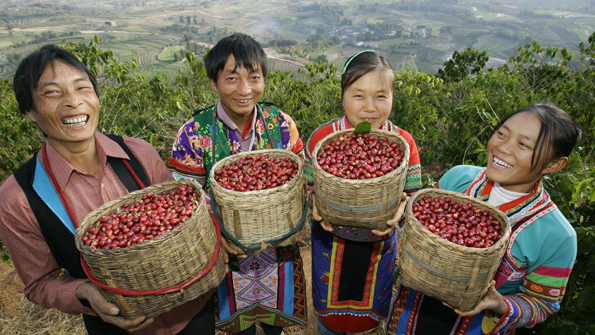
The green dream of Yunnan coffee is the only way to take intensive processing, and join the competition of international coffee giants.
Yunnan coffee was planted on a large scale in the mid-1950s, with a planting scale of 4000 hectares at one time. By the end of 1997, the planting area of coffee in the province had reached 7800 hectares. At present, the planting area of the province accounts for 70% of the national area, and the output accounts for 83% of the whole country. Yunnan coffee has established the dominant position in China in terms of planting area and coffee bean production. At present, Pu'er City is still there.
2016-07-08 Yunnan coffee green dream fine deep processing the only way join international
What is the cream plant fat powder commonly known as "cream"
Plant fat powder, commonly known as milk essence, is mainly composed of syrup, vegetable oil, sodium caseinate, emulsifier and so on. Milk essence is basically divided into three types: heat-soluble type, cold-water instant-soluble type and foaming type, which are widely used in solid foods such as seasoning, nutritious cereal, infant formula rice noodle, sesame paste, soy milk crystal and peanut crystal, as well as dairy drinks, pearl milk tea, coffee companions, ice cream, freezing and baking.
2015-05-25 What cream plant fat commonly known as commonly known as cream by syrup plant